Business first.
Start with what your organization needs to accomplish and the risks that stand in the way.
About Vectari
We help businesses work through security requirements with their leadership, IT teams and existing providers.
Let’s talk
Start with what your organization needs to accomplish and the risks that stand in the way.
Work alongside your leadership, internal teams, and IT partners so decisions and responsibilities are understood.
Focus on realistic next steps and useful evidence of improvement, not a longer list of tools.
Leadership & partnership
Security leadership works best when your business priorities guide the conversation. Talk with Vectari about your goals, the people on your team and how we would work together.

Managing Principal & Client vCISO
Jeremiah Udy brings more than two decades of cybersecurity and risk leadership to Vectari. His background spans federal government and private-sector organizations, including work at the U.S. Department of the Treasury and leadership of IT and software teams.
He helps leaders turn technical findings into business decisions: understand the risk, clarify who owns it, and build a practical plan backed by the right resources. Working alongside existing teams and IT partners, he focuses on security program maturity, compliance readiness, and clear accountability.
Jeremiah also writes about independent security validation and the foundations for responsible AI adoption. His approach encourages people to surface concerns early, solve problems together, and keep security connected to business goals. He has earned CISSP and CCSP certifications.
View LinkedIn profileMicrosoft 365 migration
In a previous role, Jeremiah Udy helped an organization move to Microsoft 365. The migration kept stalling as new security concerns surfaced. Existing policies didn’t cover the new cloud environment, leaving the team to work out requirements while the project was already underway.
Jeremiah brought the stakeholders together for a high-level threat model. The group worked through the security requirements and captured them in a matrix.
That matrix became the reference for the rest of the migration. The security stakeholders had helped create it, and they didn’t challenge the agreed requirements again as the project progressed.
The team could finally get on with the migration. With the agreed matrix guiding the work, they got the project over the line on time.
Published perspectives & community education
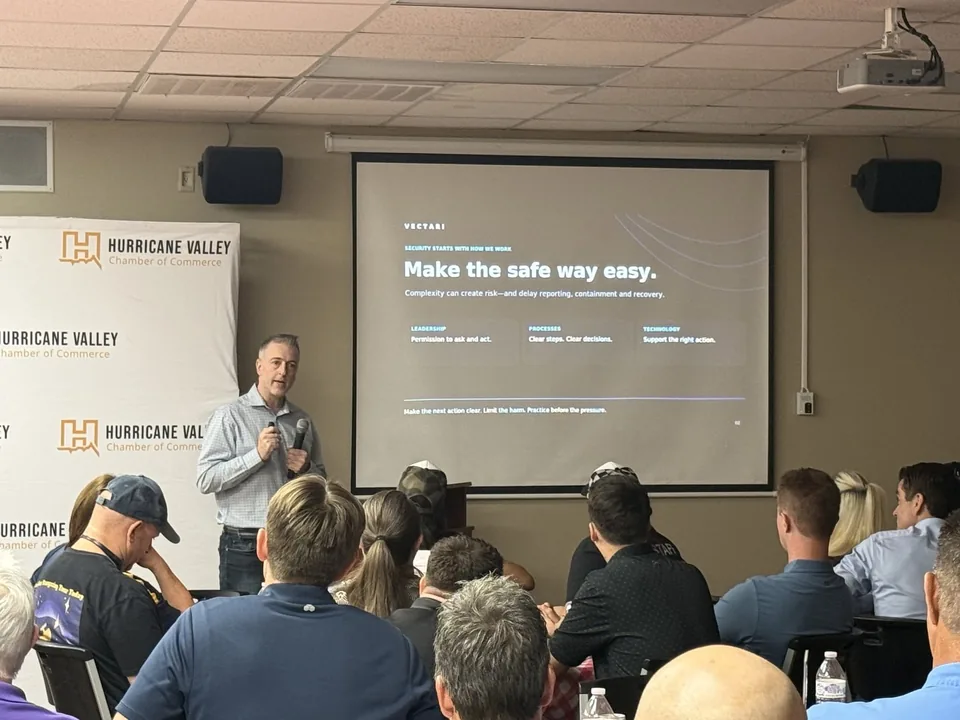
Speaking · September 17, 2026
Jeremiah Udy spoke at the chamber’s Cybersecurity Essentials luncheon in Hurricane, Utah. His presentation focused on clear steps, clear decisions and making security easier for the people doing the work.
See the chamber’s Facebook photo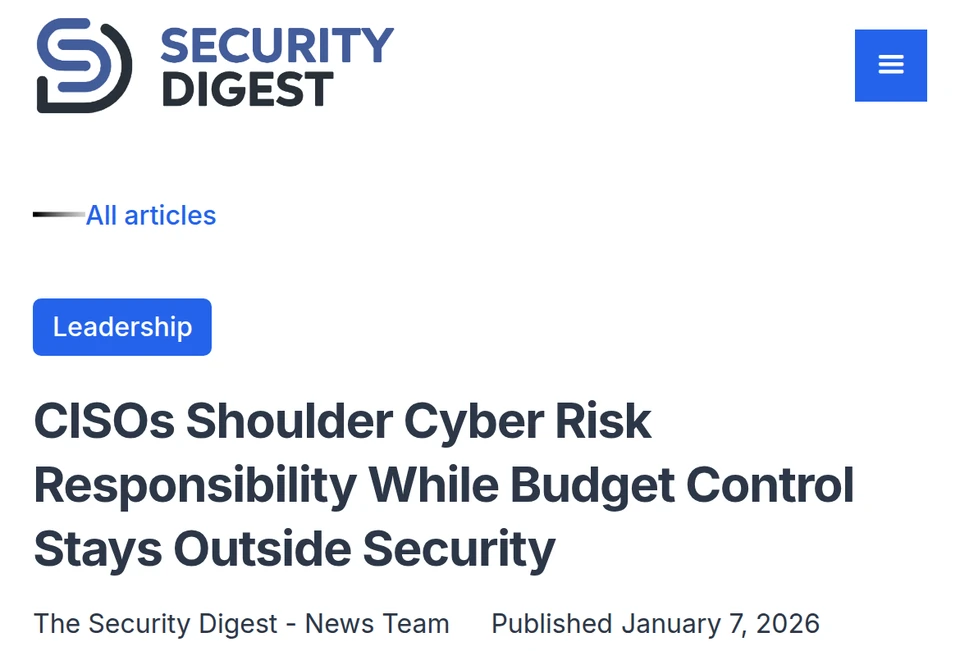
Interview · January 7, 2026
In The Security Digest, Jeremiah discusses connecting risk ownership to decision-making authority and resources.
Read the published interviewExplore illustrative planning examples: a risk register, responsibility map and evidence index. Each connects a question to an owner, a decision and a supporting record.
Explore sample work & templatesTake the first step
Check a domain, review a link or work through your security priorities. No account required.
 Take the free security assessment